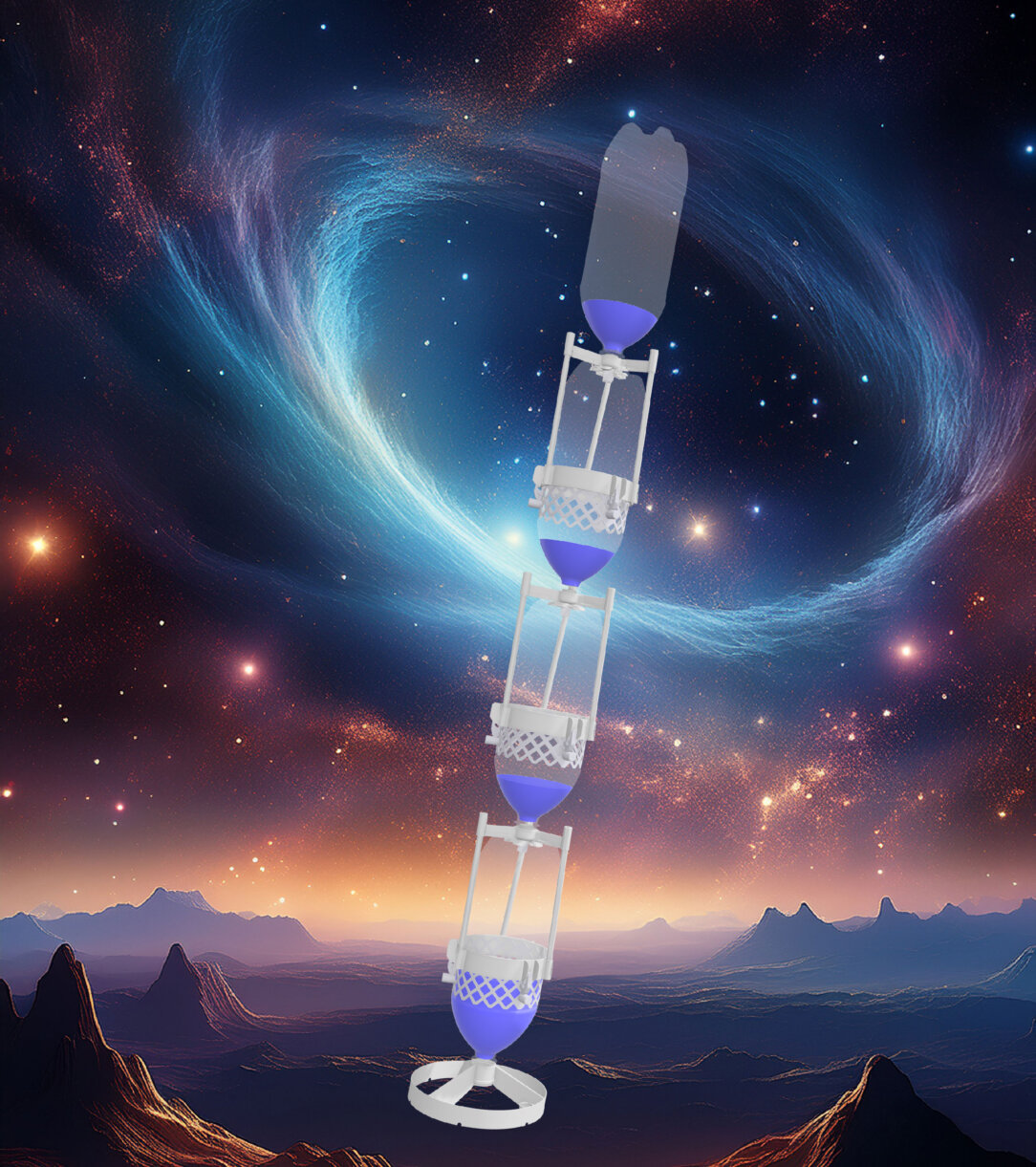
Whether you’re making your own water rocket using our DIY homemade rockets, or have purchased one of our Professional Advanced rockets, you’ll find that our designs offer you the ability to really fly high. Why do these designs fly so incredibly high? Here are three water rocket tips that will show you why.
Water Rocket Tip
#1: Open Neck Nozzles
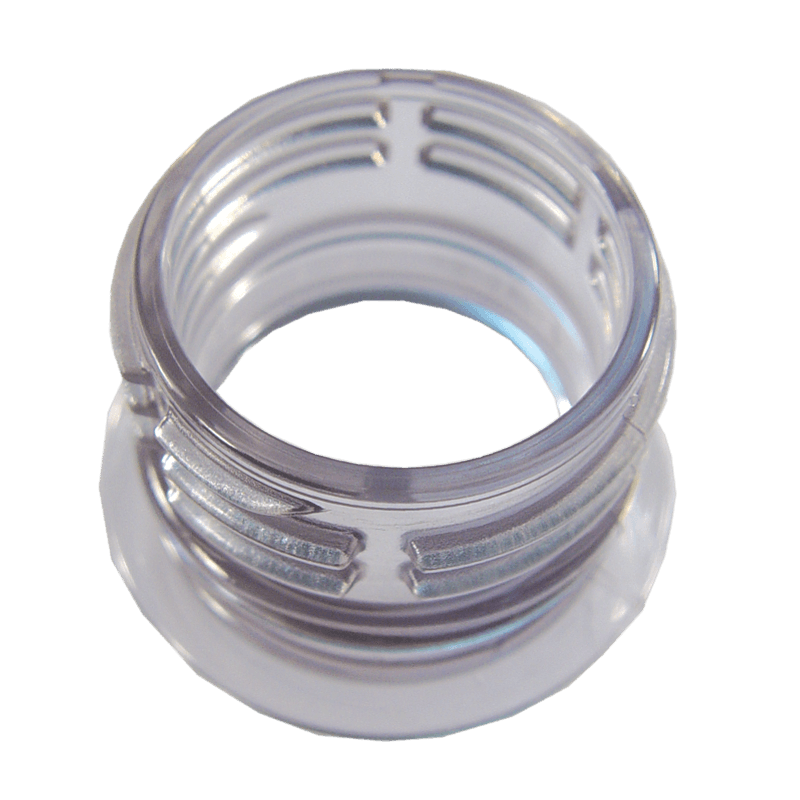
The booster stage on all AntiGravity rockets uses the open neck of the pop bottle as the nozzle. This gives us a thrust of 46 pounds which is great for lifting up to 3 more rocket stages. If the thrust of the rocket is too little, most of the energy can be wasted just trying to counteract gravity. But when the thrust outdoes gravity by a huge factor, most of that energy goes into lifting and accelerating the rocket.
There’s another advantage that comes from such a large amount of thrust. From the moment of liftoff, the rocket moves very quickly to spinning fast enough to be stable, so there is no need for a long hazardous guide rod. In fact, AntiGravity’s single stage rockets work very well without any guide rod at all.
As we move up the rocket to the second, third, and fourth stages, each nozzle gets smaller and smaller so that it is sized exactly to the requirements of the job.
Water Rocket Tip #2: Once the rocket is going fast enough, we just need enough thrust to keep it going.
The 2nd, 3rd, and 4th stages don’t need to keep accelerating as much as the first stage did. They just need to keep things going.
Building a rocket with a nozzle that’s too big is like using a bulldozer to clean up the kitchen. Sure, you’ll get the job done, but why risk all those dishes?
All of AntiGravity’s rocket stages use nozzles that are sized to fit the job requirements. They are much, MUCH smaller than the open neck of the bottle.
Below are the three different sizes of AntiGravity nozzles, each precisely cut, centered and sized perfectly for the longest-lasting thrust and the least air friction.
Just LOOK at the centre hole in each of the nozzles below:
- the largest nozzle for 2nd stage of the 4-stage
- the medium nozzle for 3rd stage of the 4 stage
- the tiny nozzle for the upper stage of the 4-stage rocket
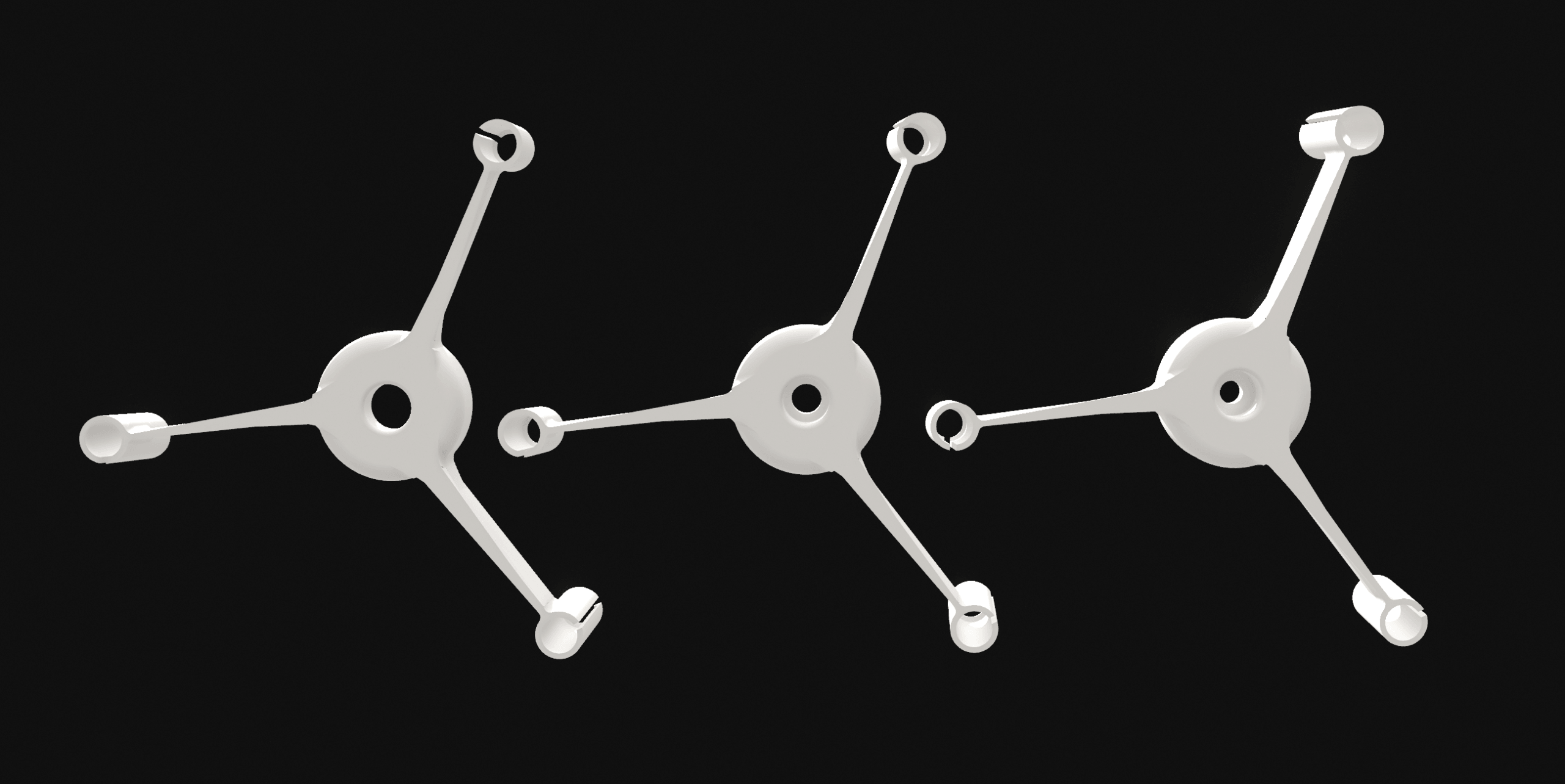 Each nozzle has just the right amount of thrust to lift your water rocket as high as it can possibly go!
Water Rocket Tip #3: Your Rocket doesn’t Need a Pointy Cone
“Do you really need that pointy cone at the top of your water rocket?” – so called ‘experts’ are always telling you to turn your rocket into an arrow and put a pointed cone on the front.
I turn your attention to the 747 airplane by Boeing. It goes 600mph through the atmosphere. How pointy is it?
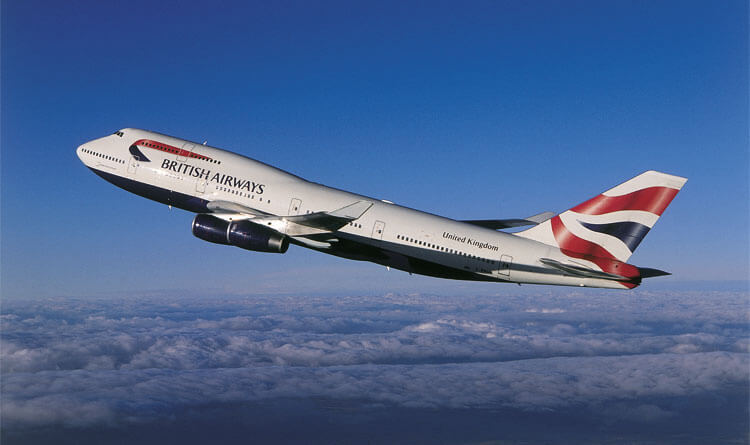
It’s not very pointy at all.
As it turns out, you only need a sharp, pointy front if you’re going supersonic. Otherwise, the pointy front slows you down. It “rips” the air.
Instead, the air should just calmly fluff around the rocket. If you’re going subsonic speeds (less than 700mph), the teardrop shape is the most efficient for air friction. Only if you’re going supersonic (700mph) do you need that pointed point.
Why are people suggesting to put a pointy tip on your subsonic rocket? Maybe once they read this they will finally get the point!
AntiGravity’s professional Advanced Water Rockets are optimized for lightness, safety, reliability, high altitude and re-useability. Get one today.